

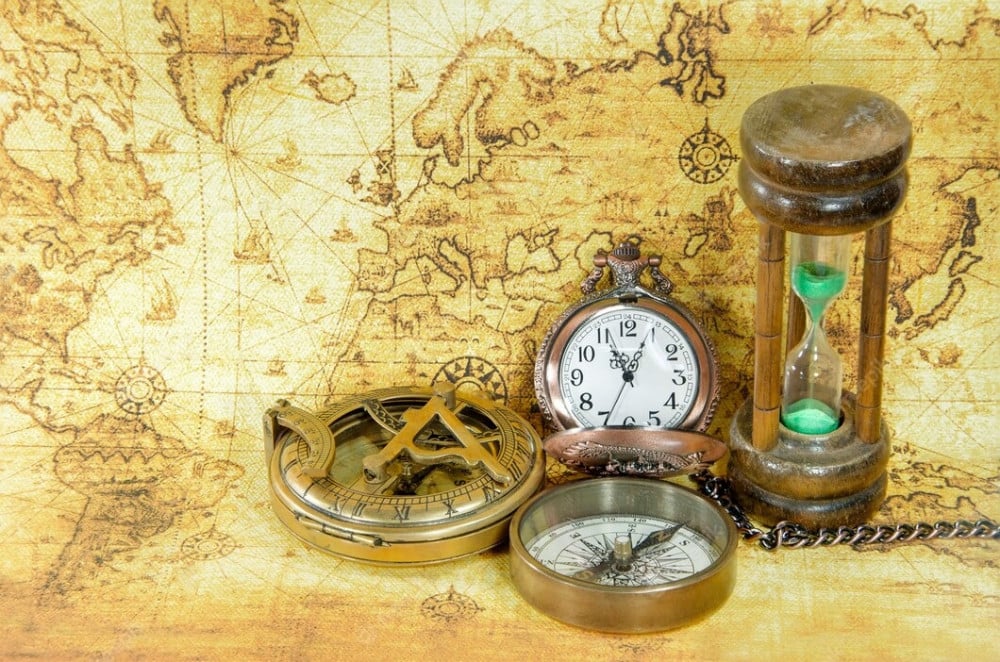
The evolution of clocks throughout history
From the earliest days of humankind to the present, clocks have been essential tools for measuring time and marking important events. Throughout history, we have witnessed the evolution of watches, particularly wristwatches, which have undergone tremendous advancements in design and mechanics. These developments and the various stages of producing high-quality, highly accurate watches in all shapes and sizes have led to their increased use in our daily lives. In this article, we will explore the evolution of wristwatches throughout history, from the invention of the first wristwatch in ancient times to the emergence of the latest technologies used in modern wristwatch design.
- Stages of watch development:
1. The history of human use of timekeeping devices
In the early days of humanity, people observed nature and the heavens to tell time. The sun, the moon, and even shadows were used to measure time. In the second millennium BC, humans began using the sexagesimal system (60 seconds per minute and 60 minutes per hour) to measure time. Over the centuries, humans developed ways to represent this sexagesimal system in timekeeping devices, such as sundials and sand clocks. In the 13th century, mechanical clocks were built in Italy, and since then, humans have been crafting well-made and accurate clocks, leading to advancements in clockmaking, improved quality of life, and the progress of civilization.
2. The evolution of the wristwatch since the seventeenth century
The wristwatch has evolved significantly since the 17th century, when it was primarily used as a small pocket watch. As designs advanced, watches began to incorporate minute and second hands, making them more precise timekeeping devices. Advances in watchmaking technology led to more accurate and elegant wristwatches , with the emergence of diverse designs for watch hands and materials. The late 19th century saw the widespread adoption of wristwatches, marking the beginning of their global evolution. Thanks to ongoing research and innovation in watchmaking technology, wristwatches have maintained their position as precise timekeeping devices and have continued to evolve and develop over time.
3. The design and common use of the wristwatch in the nineteenth century
In the 19th century, the wristwatch began to gain popularity. Beautifully and elegantly designed, it was considered an important accessory for fashionable attire at the time. Wristwatches were among the most commonly used timepieces in the 19th century and were available in various sizes and styles. Even today, wristwatches remain widely used and are considered a symbol of elegance and beauty. Despite the passage of centuries, humankind still needs timekeeping devices and continues to develop them to meet its needs.
4. The sundial and the appearance of the monastery clocks and clock towers
Since ancient times, humans have needed a way to measure time, and the sundial was among the first tools used, relying on the sun's movement to determine the time. Fortunately, continuous technological innovations provided a solution to the global problem of timekeeping, leading to the development of monastic clocks and clock towers, which used location and angle to calculate time more accurately. By marking times for worship and daily activities, the clock began to play a fundamental role in human life. From this point, water clocks, shadow clocks, and pocket watches evolved rapidly, and new wristwatches emerged, uniquely designed and incorporating a range of advanced features. These sophisticated innovations, combined with the skill of artists and craftsmen, have ensured that wristwatches remain a fashion statement and a symbol of elegance to this day.
5. New inventions in wristwatches in the early twentieth century
In the early 20th century, wristwatches witnessed significant advancements and innovations, most notably the advent of quartz watches, which revolutionized watchmaking. This type of watch is more accurate and reliable than traditional watches, as it uses electrical power instead of a mechanical spring. Wristwatches were further developed with the addition of new features such as counters, timers, alarms, and more, allowing users to measure time more easily and precisely. Bold and modern designs also emerged, catering to diverse tastes while maintaining high manufacturing quality and performance. The evolution of wristwatches during this period represents a qualitative leap in craftsmanship and technology, with a focus on adding new features and improving performance to meet the evolving needs of users.
6. The invention of the pendulum clock
The invention of the pendulum clock can be considered a major turning point in the history of timekeeping. It was invented in the 17th century by Christiaan Huygens, who had studied the workings of a clock first observed by Galileo in 1583. The pendulum clock was made possible by the Doppler effect and a simple interaction with magnets. What distinguished it from earlier clocks was its accuracy, stability, and the rapid pulsations of the pendulum's arm. The pendulum clock made timekeeping more precise, which contributed to the development of various industries, including transportation, engineering, and even maritime navigation. This invention is part of the story of how timekeeping devices have evolved into what they are today, a process that has been continuously refined through ongoing technological challenges and innovations.
7. History of quartz watchmaking
The quartz watch is considered one of the most important inventions in the history of watchmaking. The 1980s witnessed a massive transformation in the watch market, with quartz watches becoming widespread and overwhelmingly dominating the market at the expense of mechanical watches. Quartz watches rely on piezoelectric technology using quartz crystals, and this technology was invented in 1929. This unique innovation can be considered a turning point in the wristwatch industry, as it led to the development of highly accurate portable watches that are still in use today thanks to their high precision. This new technology gave a new impetus to watchmaking, and quartz became a major component in their innovations. Quartz watches are one of the most prominent components of modern watchmaking, offering greater accuracy and capabilities than traditional watches.
8. Art and craftsmanship excelled in the development of timekeeping instruments.
The evolution of wristwatch design has seen its ups and downs throughout history, but artistry and craftsmanship have always been integral to the development of timekeeping devices. From the meticulous selection of materials to the smallest details, everything is crafted with artistry and skill to imbue watch design with artistic and cultural value. Thanks to the creativity and diverse interplay between art and technology, watchmakers, in collaboration with artists and designers, have been able to create unique and distinctive designs that transcend mere timekeeping, excelling in beauty and artistic expression. Just as the evolution of timekeeping devices is characterized by artistic diversity and versatility, so too is the development of timekeeping a constant source of innovation and challenge.
9. Art and Technology in Watchmaking
Watchmaking is both an art and a craft, requiring precise technical knowledge to accurately tell time. Art and technology have combined to drive the continuous evolution of watchmaking throughout the ages. Century after century, manufacturers have made decisions and devised methods to improve watch functionality while maintaining the ideal quality and precision expected in art. Among the designers who have become renowned in watchmaking are the Swiss watchmakers of the 18th century, and many other prominent young designers who blend art and technology to create complex and unique timepieces.
10. Stories of creativity and discovery in the history of wristwatches.
The world of wristwatches is rich with stories of creativity and discovery. The history of watchmaking has witnessed many innovators who pushed the boundaries of the technological possibilities of their time and overcame numerous challenges. Among these innovators were Christiaan Huygens, who invented the "hairspring," which led to the evolution of wristwatches, and Alberto Santos-Dumont, who commissioned the renowned watchmaker Louis Cartier to design a watch to assist him during his air travels. The history of watchmaking also showcases many creative stories of the interplay between art and technology in the development of timekeeping devices. Artists have used their skills and artistic creativity to design watches, transforming them into stunning works of art. This provides a true example of the convergence of craftsmanship and technology in the history of watchmaking.
To view a wonderful and luxurious collection of watches:
Pepsi men's watch
- Similar to the D1 MILANO in luxurious black