

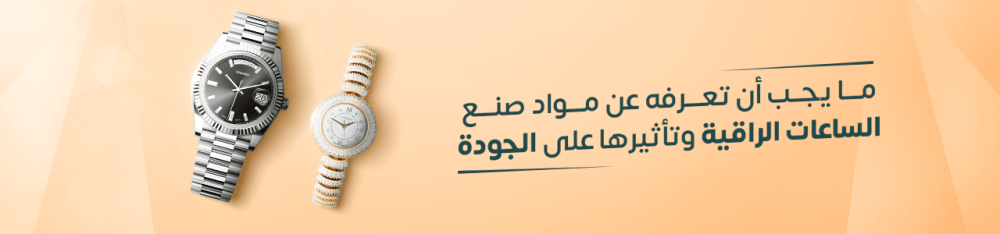
The original types of watches in the fine watchmaking industry are considered an art that requires dedication and precision to achieve exceptional quality. Through the use of advanced technical methods and the dedication of employees in this field, luxury watches with unique designs and unparalleled quality are achieved.
Before discussing the materials used in crafting fine watches and their impact on quality, it's important to understand that the quality of a watch isn't solely determined by the materials used, but also by the design, craftsmanship, and technology employed. However, materials can play a significant role in enhancing and elevating quality and performance.
There are many materials used in the manufacture of fine watches, and I will give you an overview of some of these materials and their potential impact on quality:
Stainless steel:
Stainless steel is one of the most common materials used in high-end watchmaking. It is durable, strong, and corrosion-resistant, ensuring the watch's longevity and longevity. Stainless steel watches are suitable for everyday use and can withstand harsh conditions.
gold:
Gold is commonly used in fine watchmaking because it lends a touch of luxury, elegance, and beauty to a timepiece. White gold, rose gold, 18-karat gold, or 24-karat gold may be used. It's important to note that gold can be relatively soft, so gold watches may require extra care to prevent damage.
Titanium:
Titanium is a lightweight yet very strong material, making it a popular choice for sports watches and stylish timepieces. It is corrosion-resistant, durable, and retains its lustrous appearance for a long time.
Ceramics:
Ceramic watches are increasingly used in the high-end watchmaking industry. They are lightweight, durable, and scratch-resistant. Ceramic watches are known for their elegant and sophisticated appearance.
Crystal glass:
Sapphire crystal and mineral glass are primarily used in the manufacture of high-end watches. Sapphire crystal is highly durable and scratch-resistant, while mineral glass is known for its strength and clarity.
In addition to the materials mentioned above, there are many other materials such as platinum, diamonds and luxury leathers that can be used in the manufacture of high-end watches.
Don't miss out on the offers from Asl Al-Fakhama. Shop now... and follow us on Instagram @AslAlFakhama .
These materials influence quality through their sustainability, durability, corrosion resistance, and precise performance. It's important to note that quality isn't solely determined by the materials; craftsmanship and design also significantly impact the watch's overall quality.
Therefore, when buying a luxury watch, all these factors should be taken into account and enjoyed for the beauty, elegance and high performance of the watch.
I hope you enjoyed reading this article about the making of fine watches and its impact on quality. Thank you for your time and attention. Please don't forget to share your thoughts and comments on this topic. We look forward to your valuable feedback. Thank you from Qanawan.